
Choosing a Game Table Based on the Way Your Group Actually Plays
Most people do not start looking for a game table because they suddenly want luxury furniture. They start looking because ordinary tables begin creating repeat problems during play: not enough room for player areas, awkward access to the middle of the board, components spreading into drink space, or campaign games taking over the dining room for days at a time.
The important question is not simply “What is the best gaming table?” The better question is: what kind of tabletop problems does your group actually run into over and over again? Different games create different kinds of friction. Some games expand physically across the table. Some depend on social positioning and conversation flow. Some create visual overload. Others simply need to fit naturally into everyday living spaces.
Table of Contents
- Spatial Expansion Games Need Flexible Table Space
- Social Geometry Games Depend on Seating Shape
- Lifestyle Integration Matters More Than Maximum Size
- Tactical Visibility Games Need Clear Margins and Better Sightlines
- Cognitive Load Games Benefit From Cleaner Visual Organization
- Coffee Tables vs Full-Height Game Tables
- Start With the Friction, Not the Furniture
Spatial Expansion Games Need Flexible Table Space
Some games do not stay the same size once the session begins. They grow.
Campaign-heavy games and long-session strategy games often start with a manageable setup, then slowly spread outward across the table as more systems enter play. New map tiles appear. More cards enter circulation. Side piles grow. Player areas expand. A setup that looked perfectly reasonable at the start of the night suddenly feels crowded hours later.
That is why expandable layouts matter more than permanently oversized surfaces for these kinds of games. The table does not need to feel huge every day. It needs to adapt when the game expands.
Games that commonly create this kind of table pressure include:
- Gloomhaven table sprawl
- large campaign crawlers
- map-expanding adventure games
For these groups, modular expansion, cleaner player zones, and flexible accessory placement matter more than decorative features.

Lifestyle Integration Matters More Than Maximum Size for Casual Games
Not every group wants gaming furniture to dominate the room.
Many casual games live in shared household spaces: living rooms, family rooms, coffee-table setups, or multi-use dining areas. In these environments, convenience matters more than maximum capacity.
Games like Catan, Carcassonne, and Splendor work best when they are easy to start, easy to replay, and easy to fit into ordinary evenings. The table should support that rhythm instead of turning every session into a formal event.
Campaign games with persistent state create a related problem. The issue is not only session comfort, but how the game continues existing in the room between sessions.
This is where convertibility becomes more valuable than specialization.
Groups dealing with these situations usually care most about:
- low-profile setups
- hidden or preserved game state
- furniture that still works between sessions
- tables that integrate naturally into living spaces
Games commonly associated with this type of setup include:
- Pandemic Legacy campaign storage
- Catan coffee table gaming
- Carcassonne casual setups
- Splendor living-room play
- D&D campaign persistence
For many groups, the best gaming table is simply the one people are most willing to leave in the room permanently.

Tactical Visibility Games Need Clear Margins and Better Sightlines
Some games punish clutter immediately.
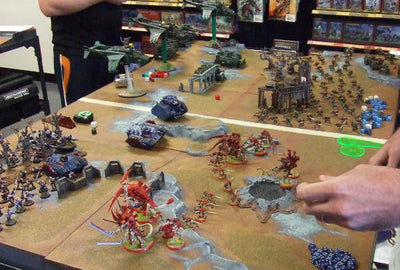
Wargames and highly asymmetric strategy games often require players to constantly read positioning, measure movement, scan multiple zones, or track faction-specific information across the entire table. In these games, visual clarity directly affects gameplay quality.
The issue is not just “having enough room.” It is having enough clean margin around the active play area so that rulebooks, faction boards, dice trays, measuring tools, and removed components do not interfere with the live game state.
Standing play also changes the equation. Many miniature games involve players circling the table, checking angles, and interacting dynamically with the battlefield instead of remaining seated the whole session.
Games that commonly create these tactical visibility problems include:
For these groups, perimeter management and sightline stability often matter more than adding even more central surface area.

Cognitive Load Games Benefit From Cleaner Visual Organization
Some games are mentally exhausting before they become physically crowded.
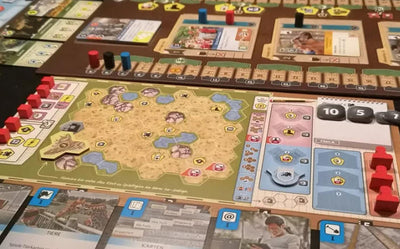
Heavy euro games often ask players to continuously scan icons, compare card effects, monitor multiple scoring systems, and track changing information across several different play zones at once. In these games, visual organization affects mental fatigue more than most players realize.
Messy layouts increase cognitive drag. Players spend more energy re-reading information, rebuilding the game state in their head, or searching for components that should feel immediately readable.
A cleaner visual field lowers that burden significantly.
Animal cards, sponsor cards, conservation projects, and reputation tracks all compete for player attention, making visual organization unusually important. Games that benefit most from this kind of organization include:
For cognitively dense games, good table design is less about luxury and more about reducing visual friction during long sessions.

Coffee Tables vs Full-Height Game Tables
One of the biggest decisions has nothing to do with materials or accessories. It is deciding where gaming fits into your life.
Full-height gaming tables usually support longer sessions, larger groups, heavier strategy games, and more dedicated play spaces. Coffee-table gaming setups prioritize flexibility, comfort, and integration into everyday rooms.
Neither approach is universally better.
Groups that regularly play campaign games, wargames, or all-day strategy games usually benefit from dedicated full-height setups. Groups that focus on casual replayable games often benefit more from tables that remain naturally integrated into living spaces.
The important thing is matching the furniture to the way your group actually behaves, not the version of gaming you imagine yourself eventually becoming.

Start With the Friction, Not the Furniture
Most people approach gaming tables backward. They start with materials, accessories, or aesthetics before identifying the actual problem they are trying to solve.
But the best table purchases usually happen the other way around.
| If your group struggles with... | Prioritize... |
|---|---|
| Expanding campaign setups | Flexibility and modular expansion |
| Socially intense games | Seating geometry and equal center access |
| Visual overload | Organization, clean zones, and sightlines |
| Games in shared living spaces | Convertibility and everyday furniture integration |
If your group struggles with expanding campaign setups, prioritize flexibility. If your group plays socially intense games, prioritize seating geometry. If your games create visual overload, prioritize organization and sightlines. If your games live in the middle of the house, prioritize integration into daily life.
Start with the friction your group actually feels. Then work backward to the table.


Social Geometry Games Depend on Seating Shape
Some games are not mainly about space. They are about interaction.
Commander, poker, and similar social games rely heavily on eye contact, quick reactions, conversation flow, bluffing, negotiation, and shared table energy. In these games, the physical shape of the table changes how naturally people interact with each other.
A table that is too large spreads players apart socially. A table with awkward seating angles weakens conversational flow. Even when the board itself fits comfortably, the social rhythm of the game can still feel strangely disconnected.
This is where table geometry starts mattering more than raw square footage.
Certain table shapes can help preserve conversational flow by giving players more equal access to the center. When players stay inside the same conversational ring, the table stops separating them into ‘sides’ and starts supporting the pod as a single social space.
Games that benefit most from this include:
For social games, seating balance often matters more than total table size.