D&D Tables Usually Fail Where the DM Plants Their Stuff
D&D table problems usually get described like a board-state problem. They are not. They are a DM footprint problem. The screen goes down first. Then the books spread. Then the initiative tracker needs a lane. Then dice, notes, stat blocks, and the backup reference pile show up. Before the first real scene finishes, the DM has already started monopolizing the table.
That is the real reason D&D setups feel cramped even when the map itself is not especially large.
Table of Contents
The DM Screen Starts the Land Grab
The screen is not just one object. It creates a front edge, a blocked strip, and a natural excuse for everything else to stack behind it. Once the screen goes up, the DM area stops behaving like one seat at the table and starts behaving like a command station.

Books and Notes Expand the Footprint Fast
Then come the books. The rulebook stays open. The adventure book stays open too. A notebook or laptop usually appears beside them. Suddenly the DM is not using one play area. They are using multiple overlapping areas that keep pushing sideways and forward into the table everyone else was supposed to share. 🛒 Explore Now
The Initiative Tracker Usually Turns a Small Spread Into a Big One
The initiative tracker is where the sprawl becomes obvious. It needs to stay directly usable for the DM during combat and stable enough that it does not get buried under books or dice. In practice, that means it claims yet another strip of live table area inside a setup that is already expanding.

Players Add Their Own Layer Too
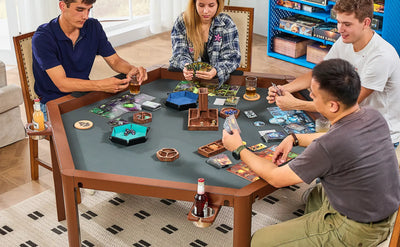
The DM is not the only person expanding. Character sheets, spell cards, dice trays, miniatures, notebooks, snacks, and drinks gradually create their own footprint around the table. The DM station starts the space problem, but the player side often finishes it.
DM Monopolizing the Table Is the Actual Problem
That is the D&D-specific problem. The DM's materials steadily monopolize the table and squeeze the shared play surface into whatever shape is left over.
Project Ironside 2.0 gives the DM enough dedicated workspace that the screen, books, and initiative tracker can stay together without swallowing the whole session. The point is not elegance. The point is stopping the DM station from eating the table.