
Why TI4 Becomes a Social Traffic Jam by Hour Six
Twilight Imperium 4 is not just a big game. It is a six-player political event. The table has to support diplomacy, trade, dealmaking, bluffing, and constant negotiation without turning every conversation into physical interference. That is the real furniture problem.
The early rounds feel manageable. Then the politics starts stacking. Two people negotiate a trade. Someone else leans in to question it. Another player reaches across to point at Mecatol Rex. By midgame, the table is not just a map. It is a live negotiation floor.

Table of Contents
By Hour Six, Everyone Starts Guarding Their Own Space
This is the stage where TI4 stops feeling neutral. Faction sheets start colliding with the social layer of the game. Trade goods get passed through active conversations. Players keep reaching across the table to point at objectives, systems, and deals that may or may not survive the round. A cramped setup makes every negotiation feel more tense in the wrong way.
Diplomacy Space Matters More Than Raw Surface Area
TI4 lives or dies on diplomacy. People cut deals, pass trade offers, read reactions, and keep checking whether anyone is bluffing. A setup that is too cramped turns that into social congestion. A setup that spreads everyone too far apart kills the conversational pressure that makes six-player TI4 work in the first place.
Faction Sheets Need Stable Boundaries
Players need enough room to organize their faction sheets and keep their political space intact while still participating in the middle of the table.
Command tokens, strategy cards, trade goods, promissory notes, and faction abilities all compete for space around each player area.
Once faction sheets start colliding every few minutes, the game stops feeling like grand strategy and starts feeling like crowd control.
Long Strategy Games Punish Bad Political Geometry Over Time
By the late game, players are no longer managing only strategy. They are managing social fatigue, constant dealmaking, and the physical irritation of trying to keep six political areas coherent for eight or more hours.
That is why TI4 needs a table that supports politics, not just a table that happens to be large.
Modular Width vs One Giant Table Surface
Modular width is more useful here than a single giant slab of surface area. It keeps the map central while giving each faction a cleaner operating lane.
In practice, that means fewer faction-sheet collisions, less reaching across live negotiations, and a table that supports politics instead of constantly interrupting it.
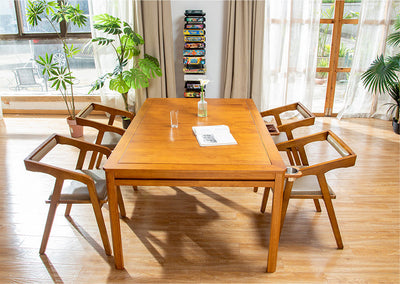
For TI4, a modular setup like Project Ironside 2.0 often works better than a permanently oversized table. TI4 does not only need a large central map. It needs faction areas that can stay stable while diplomacy keeps flowing across the table. Modular width helps preserve those political lanes without pushing players so far apart that the social pressure disappears.
 Some groups solve part of this with side tables or TV trays. Fair enough. But the core TI4 problem is still whether the main table can handle six-player politics without clogging the social flow.



Six Players Create Social Congestion Fast
A good TI4 table needs one stable central map, but it also needs six faction areas that can stay intact while people constantly talk across them. If those personal areas are too shallow or too close together, the politics starts physically running into itself.