Why Gloomhaven Slowly Takes Over the Entire Table
Can you play Gloomhaven on a dining table? Sure. Most groups do, at least at first. The problem is not the opening setup. The problem is that Gloomhaven keeps adding physical material after setup, so the table footprint that felt fine at the start stops matching the game a few scenarios later.
That is why people misjudge it. The first room looks contained. The campaign does not stay contained. As new rooms open, summon tokens spread, modifier decks stay active, and campaign extras accumulate, Gloomhaven slowly turns table space into one of the biggest parts of the session.
Table of Contents
Most Groups Notice the Problem Hours Into the Session
Gloomhaven creates table pressure through physical component growth. New rooms open. Summon tokens need space that did not exist at setup. Modifier decks keep occupying live table area instead of staying neatly contained. Campaign play also creates a habit of keeping extra piles, references, and persistent material close at hand because the game never really resets back to a minimal footprint.
The result is not one dramatic moment. It is accumulation. A few extra decks, a few extra piles, one more room tile, one more summon zone, and suddenly the game is physically larger than the table plan you started with.
New Rooms Change the Shape of the Table
New rooms are the real trigger. A setup that looked stable at the start stops being stable once the map opens outward mid-scenario. The table is no longer holding one battlefield. It is holding a battlefield that keeps changing shape.
Summons, Modifier Decks, and Campaign Extras Spread the Footprint
What pushes Gloomhaven over the edge is not any single component. It is the combination of summon tokens, modifier decks, status piles, loot, discards, and all the little campaign accumulations that create secondary spillover areas around the main play area. Those extra areas are what turn a manageable setup into a crowded one.
The Side Systems Keep Growing Too
That is what makes the game different from a one-session dungeon crawler. Gloomhaven keeps layering physical systems onto itself over time. Even when the board state looks under control, the campaign logic keeps producing more things that need a home on the table.
Why Modular Tables Make More Sense for Gloomhaven
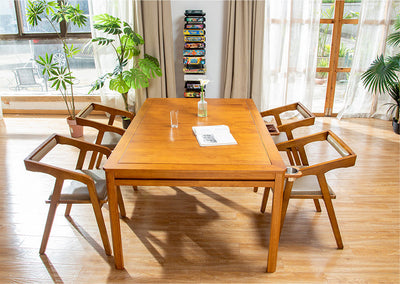
Modular tables like the Project Ironside 2.0 start making more sense than fixed dining-table layouts. Gloomhaven does not expand evenly. One session may need more room for summons, another may need more space for modifier decks, status piles, or campaign materials.
A modular layout handles that shifting footprint better because the table can adapt as the campaign keeps layering systems onto itself.
Late-Session Fatigue Usually Starts With the Layout
Groups running regular three- or four-player campaigns notice this fastest because the problem compounds over repeated sessions. Most tables survive scenario one. The issue shows up later, when every new room, summon token, modifier deck, and persistent campaign extra starts competing for the same finite surface.