Should a Gaming Table Be in the Basement, Dining Room, or Living Room?
Table of Contents
Compare the Real Friction by Room
Gaming table placement changes how often the table gets used. A basement may offer space. A dining room may offer convenience. A living room may offer comfort and social visibility. The best location is not always the biggest room; it is the room with the least friction before, during, and after play.
A basement is strong for dedicated groups. It can hold basement game room storage, terrain, shelves, and larger tables without competing with daily household life. Noise matters less, late sessions are easier, and the room can keep an active campaign setup longer. The downside is isolation. If the basement is cold, dim, unfinished, or far from snacks and bathrooms, casual players may not want to stay there.

Use the Room for Dedicated Sessions
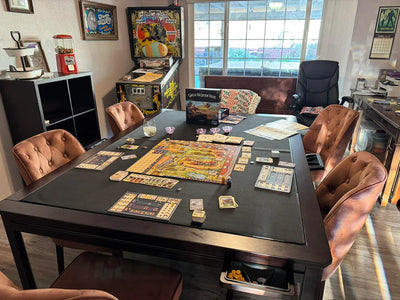
A dining room is the best shared-use option for many homes. It already has a central table position and upright seating, so a dining room gaming table can feel natural instead of forced. It also makes game night accessible to family and guests. The challenge is appearance and reset. If the dining room needs to look clean between sessions, use a convertible table, nearby storage, and a clear routine for accessories.
A living room is the most social location, but also the easiest to clutter. A living room game table works well for casual board games, family games, and smaller groups. It works less well when the seating is too low, the table is too small, or the room's layout faces a TV instead of the table. If you want a living-room setup, choose furniture that blends in and storage that closes.

Quick decision table: Best Room for the Gaming Table
| Location | Main advantage | Main risk to check |
|---|---|---|
| Basement | Best for storage, terrain, noise control, and long sessions | Can feel isolated if cold, dim, or far from snacks/bathrooms. |
| Dining room | Already has upright seating and central table position | Needs fast reset and a clean closed-table look between sessions. |
| Living room | Most social and easiest for casual play | Seating may be too low and storage clutter becomes visible fast. |
| Shared-use room | Highest daily-use value | Needs convertible furniture and nearby accessory storage. |
Place Storage Near the Table
Noise and interruption matter too. A basement protects long sessions from TV, pets, and household traffic. A dining room keeps players connected to the rest of the home. A living room makes casual play easier but may compete with movies, kids, or guests. The right answer depends on which friction your group feels most often.
Put the gaming table where the whole session becomes easier: choosing the game, setting it up, playing comfortably, pausing if needed, and resetting the room afterward. The best board game room layout is the one that removes friction from that full sequence, not the one that only looks best in a photo.