How to Build a Gaming Room That Adults Actually Want to Use
Table of Contents
Build Around Adult Use, Not Theme Decor
An adult board game room has to do more than look fun. It needs to support long sessions, serious hobby gear, guests, drinks, rulebooks, and a room that still feels mature when nobody is playing. The best adult game rooms are planned around how people actually play, not around posters, novelty lighting, or a shelf full of boxes.
Start with the main session type. A D&D group needs different support from a miniatures group. Card games need cleaner player stations than a campaign board game. Heavy Euros need table space that keeps player boards readable for several hours. When the room is planned around the game type first, comfort, lighting, storage, and seating become specific decisions instead of generic advice.

Plan the Room by Game Type
For D&D and other RPG sessions, the room needs a strong GM position. The GM needs space for notes, dice, books, a screen, maps, and sometimes a laptop. Players need personal space for character sheets and dice without overcrowding the center of the table. A nearby side station can reduce pressure on the main table by keeping extra books and accessories within reach but out of the main play area.

For miniatures and war games, the room needs walking space more than soft seating. Players stand, measure, check angles, move models, and lean over terrain. The table should support a clear battlefield, while terrain, trays, and rulebooks live nearby but outside the movement path. For card games, the opposite is often true: the table can be smaller, but each player station needs a clean edge, good reach, and safe drink placement.
Adult Game Room Layout
| Game type | Room priority | Best layout choice |
|---|---|---|
| D&D / RPG campaigns | GM position, notes, books, dice, and shared map space | Use a central table with a GM side station so books and screens do not crowd player sheets. |
| Miniatures and war games | Standing lanes, terrain access, measuring angles, and reach | Keep walkable perimeter space and store terrain beside the table, not behind seated players. |
| Card games / TCG nights | Clean player stations, edge space, and safe drinks | Use equal personal zones with card holders or trays; keep accessories off the draw/discard area. |
| Heavy Euros / campaign board games | Readable player boards, long-session comfort, and pause-friendly setup | Choose a larger play surface with nearby active storage for trays, decks, and current boxes. |
| Mixed adult hosting | Room looks mature before and after play | Use closed storage, consistent furniture finishes, and accessories that disappear after reset. |
Choose Furniture That Supports the Session
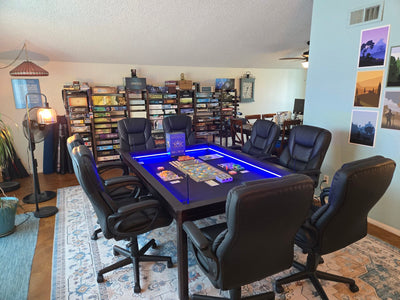
Furniture is where an adult game room either feels intentional or starts to look like a temporary hobby corner. The seating should work for long sessions after dinner, but it should also look like it belongs in a finished room when guests are not playing. For RPG nights, players need upright seats for note-taking and dice rolling, while the GM may need a wider side position for books, a screen, or a laptop.
Comfortable gaming chairs matter, but the adult test is sharper: would these chairs still make sense if the room hosted drinks, conversation, or a non-gaming guest tomorrow?
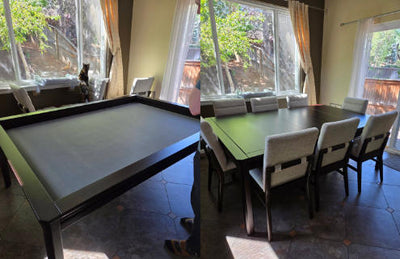
The table should also feel like furniture first and game equipment second. Miniature groups need reach and perimeter space, but the terrain should not live permanently across every visible surface. Card-heavy groups need clean personal zones, safe drink placement, and edges that keep decks from crowding dinner-style conversation. Campaign board games need enough surface for the shared board plus player boards without turning the room into storage overflow.
A board game table with storage works best when it hides the active mess: current campaign boxes, trays, card holders, terrain, or rulebooks stay close, but not on display all week. That is what makes the room feel adult: the hobby is easy to start, easy to host around, and easy to make presentable again.
Keep Storage Mature and Game-Specific
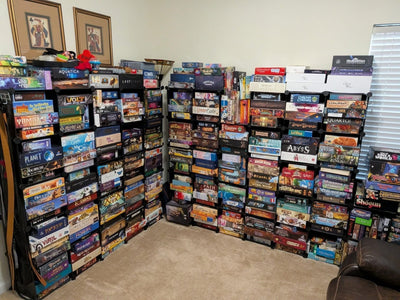
Adult game rooms usually fail when the collection becomes visual noise. Modular board game storage works best when games are grouped by actual use: current campaigns, heavy strategy games, miniatures, card games, and quick social games. The room feels more mature when the collection is readable instead of simply stacked.

Gaming table accessories should also be treated as tools. Card holders, trays, cup holders, mats, dice towers, and sleeves should come out when they improve the session and disappear when they do not. This keeps the room from looking like a permanent hobby workbench.

Make the Room Work for Hosts and Non-Players
Adult game nights often include people who are not playing the same way. Someone may teach rules, watch a session, bring drinks, check a rulebook, or join late. Leave one side path, one side surface, or one extra chair that does not trap players. This is what separates an adult game room from a room that only works when everyone is already seated.
The room should also reset cleanly. When the table clears, the chairs tuck in, and active tools return to one place, the room feels intentional. A gaming room adults actually want to use is not just comfortable. It respects time, hosting, home aesthetics, and the different ways tabletop games use space.