How Much Space Does a Gaming Table Really Need?
The size of a gaming table is only half the measurement. The real footprint includes chairs, player movement, walking clearance, storage access, and the way people behave during a game. A table can technically fit in a room and still feel terrible once six people sit down.
Table of Contents
Measure the Table Plus People
The size of a gaming table is only half the measurement. The real footprint includes chairs, player movement, walking clearance, storage access, and the way people behave during a game. A table can technically fit in a room and still feel terrible once six people sit down.
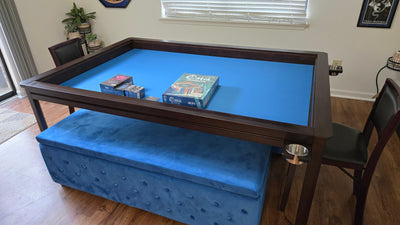
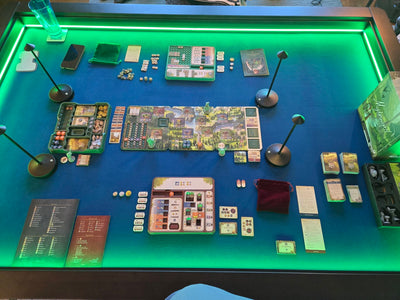
Start with the table surface. Gaming table dimensions should be judged by the games you actually play, not only by the furniture footprint. A 3x5 gaming table can work for many board games, card games, and smaller RPG sessions. A 4x6 gaming table gives more room for larger groups, miniatures, sprawling Euros, and games with personal player boards. But the room does not only need the table. It needs the table plus people.

Plan Around Chair Clearance
A practical rule is to plan about 30 inches behind each chair for sitting and standing. If people need to walk behind seated players, 36 inches is better. In tighter rooms, you can reduce clearance on one low-traffic side, but do not reduce every side and expect the room to feel good.

For example, a 3x5 foot table may need a room closer to 8x10 feet if players sit on all sides and need comfortable movement. A 4x6 foot table can easily push the comfortable room needed closer to 9x11 or 10x12 feet, depending on chair depth and traffic. These are not rigid rules, but they keep players from treating board game table size as a tabletop-only question.
Match Surface Size to Game Type
Also think about reach. A larger table is not automatically better if players cannot reach the center. Miniatures games may benefit from more surface area, while card games and social deduction games often feel better when players are closer. If your group plays several styles, choose a table size that handles your most space-hungry game without making smaller games feel distant.
Keep Storage Out of the Seating Path
Storage access is part of the footprint too. If shelves sit behind a chair, players will need to move every time someone grabs a box or accessory. Keep active storage near the room but outside the seating path. A storage bench or side station can help if wall shelves are too far away, and a gaming table with chairs should be measured with those access routes in mind.

Use your largest regular game as the test case. If that game needs a central board, four player boards, card rows, tokens, and drinks, lay those zones out before buying. A table that only works for the box dimensions may still fail once the game is actually on the surface.
Quick decision table: Gaming Table Space Estimates
| Table surface | Room planning estimate | Best use case |
|---|---|---|
| 3x5 ft table | About 8x10 ft room when players sit on all sides | Many board games, card games, and smaller RPG sessions. |
| 4x6 ft table | About 9x11 to 10x12 ft room depending on chairs and traffic | Larger groups, miniatures, sprawling Euros, and player boards. |
| Chair clearance | 30 inches behind each chair; 36 inches if people walk behind players | Prevents a table that fits on paper from feeling cramped in use. |
| Existing table add-on | 149.5 x 91 cm tabletop gaming zone on BoxKing tabletop option | Useful when the room cannot take a second full-size table. |
Tape the Footprint Before Buying
Before buying a gaming table, test the footprint in the actual room. Use tape to mark the tabletop dimensions on the floor, place chairs around it, and walk through the space as if a real game night was happening.
Try opening a game box, reaching across the table, moving around seated players, and accessing nearby storage. If the room already feels awkward before the table arrives, the problem will become more obvious once the surface is covered with boards, cards, drinks, and accessories.
The best gaming table is not always the largest one available. It is the size that gives players enough room to enjoy the game while allowing the room to continue functioning afterward.