How High Should a Gaming Table Be for Board Games, RPGs, and Dining Use?
The height of a gaming table affects comfort more than most people realize. If a table is too low, longer sessions start to feel cramped and players lean forward too much. If it sits too high, cards, minis, and player boards feel less natural to manage. The best gaming table height depends on how the table will actually be used: board games, RPGs, dining, or some mix of all three.
Table of Contents
- Why Height Matters More Than Table Size
- A Practical Height Guide
- Height, Chair, and Leg Clearance Work as One System
- Board Games Usually Need Stable Dining-Height Comfort
- RPGs and Recessed Play Areas Change the Feel Slightly
- Dining Use Means the Table Cannot Feel Too Specialized
- The Best Height Is the One That Fits the Whole Use Case
Why Height Matters More Than Table Size
A large surface does not fix bad posture. Players still need to rest their arms naturally, reach the center without strain, and sit at a height that works with the chair instead of fighting it. That is especially true on a gaming table, where rails, cup holders, and recessed play areas subtly change how people sit compared with a flat dining table.
A Practical Height Guide
For most homes, standard dining-height territory is still the safest starting point. Around 29 to 31 inches usually works well for general board gaming because it matches what most dining chairs are built for and keeps the table comfortable for meals too. A slightly lower setup can feel more relaxed for casual lounge-style play, while a taller setup makes more sense only when the room, chairs, and use case are intentionally built around that choice.
That is why height should be judged as a system, not as a standalone spec. The table, chair, leg room, and play surface all work together.
Height, Chair, and Leg Clearance Work as One System
A good gaming setup is not created by table height alone. Seat height changes elbow angle. Cushion thickness changes how high the player actually sits. Leg clearance affects whether people can stay close to the table without pulling back or shifting constantly. Once those factors move out of balance, even a technically reasonable table height can start feeling wrong in real play.
That is why posture problems often come from a mismatch, not a single bad measurement. A table can be fine on paper, but if the chair sits too high, the knees crowd the underside. If the chair sits too low, players start lifting their shoulders and reaching upward instead of settling naturally into the session.
Board Games Usually Need Stable Dining-Height Comfort
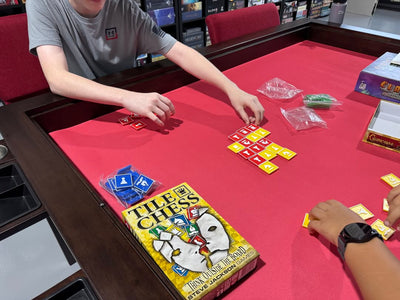
Most board game groups benefit from a height that feels familiar right away. Euro games, card games, and campaign games often run for hours, so small comfort issues become real problems by mid-session. A table that sits in the normal dining range is usually the easiest way to support repeated reaching, note-taking, and long seated play without making the room feel specialized.
It also pairs more naturally with the chair guidance already in BoxKing’s best chairs for gaming table. Height and chair choice should be evaluated together, not as separate purchases.
RPGs and Recessed Play Areas Change the Feel Slightly
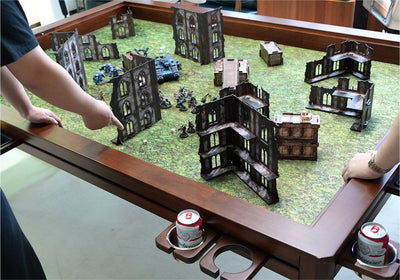
RPG sessions add books, screens, maps, and reference material, so the ideal setup is not just about meal-style seating. A gaming table with a recessed play area can change the effective hand position during play, which is one reason overly tall tables can become awkward faster than players expect. The goal is to keep the surface usable for map work and player materials without forcing everyone to hover above the table.
Dining Use Means the Table Cannot Feel Too Specialized
If the table also serves as everyday furniture, height has to work beyond game night. That is where a design like BoxKing’s wood gaming table becomes easier to judge. The question is not just whether it looks good. It is whether meals, conversation, and normal seating still feel natural when the gaming features are not in use.
The Best Height Is the One That Fits the Whole Use Case
The wrong way to choose gaming table height is to treat it like an isolated spec. The better approach is to ask whether the height supports your actual chairs, your leg clearance, your main game types, and your need for dining use. For most players, standard dining-height logic will still be the right answer. The advantage comes from choosing a table that preserves comfort while still supporting the way tabletop games are really played.