How to Create a Gaming Space Without a Dedicated Game Room
Table of Contents
Build the Setup Around One Repeatable Play Zone
The best game room ideas for small rooms usually start with a simple question: where can the same play zone open, work, and reset every time? You do not need a spare room to create a great game night experience. You need one reliable play surface, a clear seating pattern, storage within reach, and a simple reset path that keeps the room functional after everyone leaves.
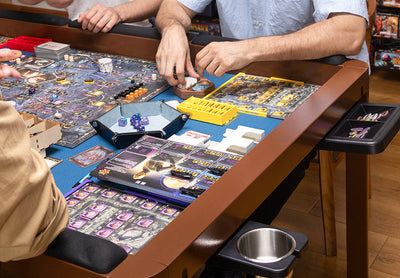
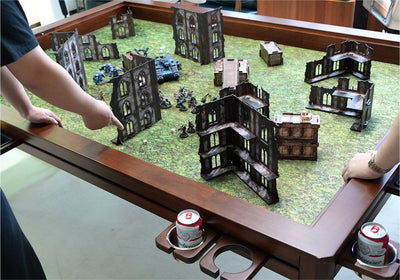
Start by choosing the main play surface before choosing decor. A coffee table gaming setup can work for quick card games, family-weight games, and casual two-player nights, but it should not be the default choice if your group regularly plays games with player boards, card markets, miniatures, or campaign notes. For those sessions, the play zone needs a proper table height, enough edge space for each player, and a place for accessories that is not in the middle of the board.

Map the Room in Zones, Not Furniture Pieces
Think of the room as four small zones: play, sit, stage, and store. The play zone is the table surface. The sit zone is where players pull out chairs or shift seats without blocking a walkway. The stage zone is a small side area for rulebooks, snacks, extra decks, or the next scenario box. The storage zone is where games and accessories return after the session.
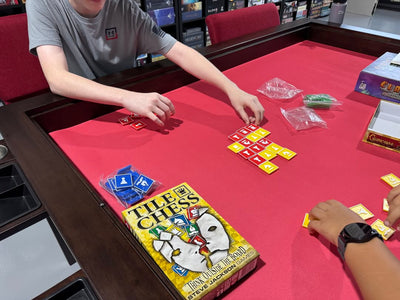
Most shared-room gaming setups fail from friction, not lack of square footage. If tokens are stored in one room, playmats in another, and the current campaign box on a random shelf, setup quickly becomes a chore. Keep board game table accessories close enough that players can grab trays, card holders, dice, or playmats without leaving the table. Keep deep collection storage can stay separate if displaying everything would make the room feel crowded.

Choose Furniture That Can Change Modes
A small-room gaming setup has to look normal when the game is finished. That is why furniture choice matters. Living room gaming furniture should support upright play without making the room feel permanently taken over. If the room already works for daily life, do not rebuild it around the biggest possible table. Use a table, bench, shelf, or side station that helps the same area switch from home mode to game mode.

For multi-use rooms, a convertible gaming table is often the cleanest upgrade because it gives the room two states: open for play and closed for daily use. If a full table is too much, use a dedicated tabletop surface, a coffee-table format, or a side station that improves setup without adding another large furniture piece. The right choice is the one that removes your usual problem: cramped components, slow setup, messy storage, or uncomfortable seating.
Use Vertical Storage Without Creating Visual Clutter
Small rooms benefit from storage that uses vertical space instead of spreading across the floor. Board game storage shelves can keep the collection close to the play zone, but open shelving should be edited carefully in a shared space. Put the most-used games at easy reach, group active accessories in one bin or drawer, and move rarely played games higher or farther away. The goal is not to display every box. The goal is to make the next session easier to start.
A useful rule is to separate active storage from archive storage. Active storage holds the games and tools used most often, including current campaign boxes, sleeves, trays, dice, pencils, playmats, and card holders. Archive storage holds the full collection. When those two jobs are mixed together, the room starts feeling crowded even if the furniture technically fits.

Run the Ten-Minute Reset Before Calling It Finished
Before buying anything else, test the setup after a real game night. Can the table clear, accessories disappear, chairs return, and the room look livable again in ten minutes? If not, the setup still needs work. Usually the fix is not another decorative item. It is a closer drawer, a better side surface, a storage shelf near the table, or fewer visible accessories.
The strongest small room game room ideas are practical first. They give every player a seat, every component a place, and every item a return path. When the same corner can open smoothly for game night and disappear cleanly afterward, you have created a dedicated-feeling gaming space without needing a dedicated game room.
Planning Guide for Small Gaming Spaces
| Constraint | What to plan | Best setup decision |
|---|---|---|
| No spare room | One repeatable play zone | Pick one surface, one seating pattern, and one reset path instead of redesigning the whole room. |
| Board or cards spread out | Separate play surface from staging area | Use the table for active play and a side station for rulebooks, snacks, decks, or scenario boxes. |
| Accessories stay visible | Active storage vs archive storage | Keep trays, dice, card holders, and playmats in one nearby bin, drawer, or shelf; move rarely used games away. |
| Room feels cramped | Chair pullout and traffic path | Keep one low-traffic side tighter if needed, but protect the main walking lane and player access. |
| Cleanup takes too long | Ten-minute reset test | If the room cannot reset in ten minutes, storage is too far away, too visible, or not assigned. |