LED Gaming Table Guide: Lighting, Power, Atmosphere, and Visibility
Table of Contents
Decide by Visibility, Not Mood
An LED gaming table should help players see cards, miniatures, dice, terrain edges, and player areas with less strain. Colored light alone is not enough. If lighting makes the table look dramatic but makes small text harder to read, it is hurting the session.

Start with the time of day and the room lighting pattern. If games usually happen after dinner, check whether overhead light leaves glare on sleeves, dim corners near player boards, or dark bands across the center. The LED decision should begin with visibility problems, then move to atmosphere.
Use this table while deciding whether built-in LEDs are useful for your room.
| Lighting need | Built-in LEDs help if... | Room lighting may be enough if... |
|---|---|---|
| Card readability | Players read small text during evening games. | Cards are already clear from every seat. |
| Miniature visibility | Models and terrain cast shadows under overhead light. | The battlefield has even light across the center. |
| Power setup | The table has a stable outlet path. | The table moves often or sits far from power. |
| Atmosphere | The room hosts regular game nights. | Lighting is needed only for rare sessions. |
When Are LED Gaming Tables Worth the Upgrade?
LEDs are worth the upgrade for regular evening sessions, dark rooms, miniature terrain, RPG atmosphere, and shared entertainment rooms that use the table as part of the room experience. They are less useful for daytime play, well-lit rooms, or occasional players who only need a clear surface for short games.
Why Built-In Gaming Table Lighting Is Different
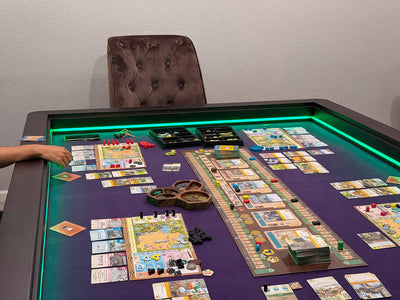
A normal table lamp sends light from one direction, so players can block it and terrain can cast shadows across cards or minis. Built-in table lighting sits closer to the play area, gives more consistent coverage around the surface, and keeps the design integrated instead of adding another loose lamp, cable, or stand near the table.

Plan Power Before the Table Arrives
Plan power access before brightness. A gaming table with LED lights needs a clean route to power, a place for cables, and a setup that does not create a tripping risk. If the table sits in the center of a room, plan the outlet path before choosing the table location.
An LED gaming table is easier to manage in a room that already has a stable play layout. If the table moves every week, cable planning becomes annoying. If the table stays in one zone, built-in lighting becomes easier to manage.
Match Brightness to the Game Type
The Kingswood 3x5 LED gaming table suits players who want a premium wood table with built-in table lighting for card games, family games, RPGs, and evening sessions. The main value is not novelty. The value is having lighting tied to the play surface instead of relying only on overhead room light.
For larger sessions, the Kingswood 4x6 LED gaming table is about lighting reach, not simply more square footage. It helps when a single ceiling fixture leaves dark corners or glare patches across a wide play area.

Keep Lighting Part of the Whole Setup
Gaming tables still need good surface planning even with LEDs. Lighting will not solve cramped player zones, drink placement, or messy components. Pair lighting decisions with table size, edge access, seating, and nearby storage.
Accessories affect LEDs when they create shadows or reflections near the rail. Keep tall holders, trays, and drink containers out of the light path so built-in lighting reaches cards, dice, and terrain instead of bouncing off clutter.
Use a Night-Session Test
Before choosing built-in lighting, test the room at the time your group usually plays. Can every player read cards without leaning forward? Do miniatures cast shadows across important zones? Can dice results be read from each seat? Can the power route stay clear?
If those answers are clean, LEDs can improve the table experience. If the room itself is the problem, fix placement and general lighting first, then choose the table.