Wargaming Table Guide: Size, Terrain, Movement, and Edge Access
Table of Contents
Plan Around the Battlefield First
A table has to support movement, terrain, dice, and player access at the same time. A table can meet the battlefield size on paper and still play badly if terrain staging, measuring lanes, or dice space compete with the army area.
Start with the battlefield your group uses most. Many miniature games ask for a 4x6 surface or a smaller marked playmat, but the playable zone is only part of the decision. You also need space along the edges for dead models, dice, rulers, tokens, mission cards, phones, and army trays.

Use the table below while comparing room layouts and table options.
| Wargaming need | Table decision | Practical check |
|---|---|---|
| Large battles | Plan for a 4x6 play area plus side space. | Rulers, dice, and removed models do not sit on terrain. |
| Skirmish games | Use a marked mat or smaller play zone. | Players can reach every model without leaning across the table. |
| Terrain-heavy maps | Keep staging space near one edge. | Buildings and objective markers wait off the battlefield. |
| Long sessions | Leave walking lanes around the table. | Players can measure movement without crowding one side. |
Give Terrain and Movement Their Own Space
Terrain-heavy sessions need more than a flat top. Buildings, hills, forests, ruins, objective markers, and measuring tools all need predictable placement. If terrain waits on chairs or the floor before setup, the game starts slower and pieces are easier to knock over.
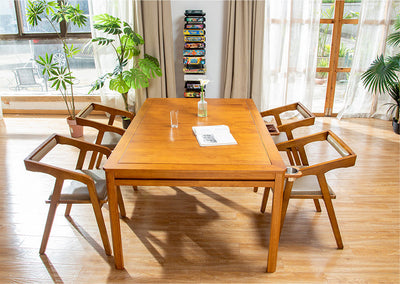
A Kingswood 4x6 gaming table gives miniature players a larger surface for terrain-heavy games, army staging, and movement lanes. Players who rotate between skirmish games and larger battles should measure the full setup, not just the battlefield rectangle.

Protect Sightlines and Edge Access
Edge access decides whether players can move models cleanly. A wide table can become frustrating if players have to lean too far into the center or walk around the room for every move. Leave a walking lane on at least three sides for games with frequent measuring and model movement.
Board game tables with clear edges help groups separate the battlefield from side tools. Dice, rulers, tokens, and casualty zones should sit outside the main fight area, not on top of terrain.
The best wargaming table is not simply the largest battlefield. It lets players reach models, measure distances, and move around the table without disturbing terrain.

Use Surface and Accessory Choices to Reduce Friction
Premium board game playmats help define the play zone, protect miniatures from hard surfaces, and make terrain placement more consistent between sessions. They are useful for groups that want the same battlefield area every time without marking the table itself.

Tabletop RPG miniatures accessories belong near the table if your sessions use terrain, minis, or campaign props. Keeping movement tools, minis, and markers nearby reduces setup time and keeps the battlefield clear.
Lighting in a wargaming article should be judged by terrain height. Place the tallest terrain piece in the center, then check whether model bases, measuring tools, and dice results stay readable from each side. If shadows hide movement lanes, solve that before spending on more surface area.

Use Reach as the Last Test
Before choosing a dedicated gaming table for wargaming, test four things: can players reach the center, can terrain wait off the battlefield, can dice roll away from models, and can the room keep walking lanes open during play?
A useful wargaming table makes movement easier, protects the battlefield from clutter, and gives terrain-heavy games enough space to run without constant resets.