Card Table With Cup Holders: How to Manage Edge Space for Drinks, Cards, and Accessories
Table of Contents
Start With Edge Space, Not the Cup Holder
A card table with cup holders should not be judged by the holder alone. The real question is how the table edge behaves during play. Cards, decks, discard piles, score pads, phones, dice trays, snacks, and drinks all compete for the same outside zone.
If the edge is poorly planned, even a useful holder can make the table feel smaller. Before choosing built-in or rail-mounted holders, decide which items deserve space near each player and which items should stay off the active surface.

What Should a Board Game Table Edge Actually Hold?
Cards, drinks, tokens, phones, dice, and accessories compete for the same limited space. The best table edge design starts by deciding what needs to stay within reach for the games played most often. A cup holder is only one possible answer.
Use this game-type table before deciding whether holders should be fixed, rail-mounted, removable, or skipped.
| Game type | Edge priority | Cup holder role |
|---|---|---|
| Poker or card games | Drink control, discard pile, chips, score pad | Useful when drinks stay near each player. |
| Board games | Player boards, tokens, cards, reference aids | Secondary to player boards and token control. |
| DND or RPG sessions | Character sheets, dice, books, DM notes | Useful only if it stays away from paper. |
| Miniature games | Rules, measuring tools, status markers | Less important than reach and tool access. |
| Shared family room | Cleanup, removable accessories, daily room use | Useful only if it does not block reset. |
Built-In vs Rail-Mounted vs No Holder
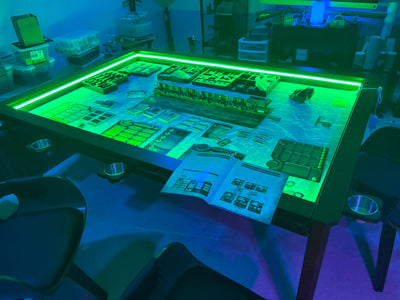
Built-in cup wells make sense when seating rarely changes. They give every session the same drink position and keep the table looking clean. The weakness is flexibility. If the holder sits too close to a hand zone or too far from the player, the table repeats that problem every session.
A board game table cup holder is a better rail-mounted or removable choice when player count changes, game type changes, or the table edge has to support cards one night and RPG tools the next. No holder can also be the right decision if drinks stay on a side table away from paper components.

Check the Table Edge Before Choosing Accessories
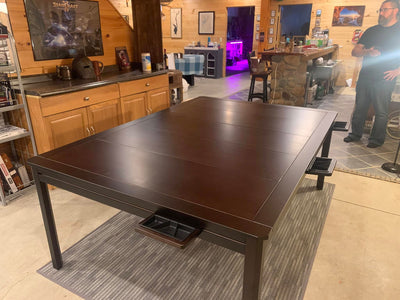
A cup holder cannot fix a poorly designed table edge. Before choosing accessories, check edge width, rail support, removable accessory options, and room flexibility. A 3–4 inch usable edge zone can usually support small accessories such as drinks, dice trays, or token holders. A narrow edge forces accessories back into the active play area. If the table has a rail system, accessories can move by player count, game type, and seating arrangement.
Board game tables used in shared rooms also need an edge that does not interfere with dining mode, cleaning, or chair movement. The table edge should make the room easier to use, not create another obstacle around the chairs.

Keep Drinks Off the Play Zone
The goal is not to place drinks close to cards. The goal is to give drinks a safe parking spot outside the play zone. A card table with cup holders succeeds when drinks stay close enough to reach but far enough from sleeves, paper boards, dice, and shared cards.
If a table already has a fixed seating layout, dedicated cup holders can solve that specific drink-control problem. BoxKing offers wooden table cup holders and Ironside rail-compatible holders depending on how often the setup changes.
Use Holder Placement as a Follow-Up Decision
Once the holder type is chosen, placement should follow the side with the most edge pressure. The best placement for your board game table's cup holders, card holders, and token trays depends on which items must stay near each player and which ones should leave the active surface.
Board game accessories should support the edge plan, not replace it. Do not add holders to every open edge by default. Leave some edges clean for player movement, card handling, or shared-room cleanup.