How to Make a Gaming Table Match Your Home Interior
Table of Contents
Match the Room Before the Features
For many players, the biggest objection to a gaming table is not price or size. It is the appearance. A table may be perfect for board games, but if it looks out of place in the dining room or living room, it becomes harder to justify to the rest of the household.
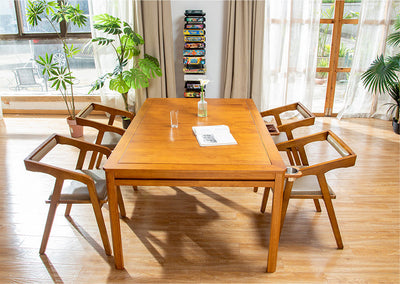
Start with the room's existing material language. If the room already uses warm wood, a wood gaming table will feel more natural than a black technical-looking setup. If the room is modern and minimal, modern board game furniture should use cleaner lines and keep accessories hidden when not in use. The goal is not to disguise the table completely. The goal is to make it belong.

Use the Topper as the Interior Bridge
Color matters because gaming accessories can create visual noise. Bright playmats, trays, dice towers, card holders, and storage boxes are fun during play, but they can make a shared room feel busy afterward. Use closed storage, benches, drawers, or a dedicated accessory zone so the table can return to a calmer look.
The topper is often the key interior-design feature. A removable or convertible wood topper lets the table shift from game mode to home mode. During game night, the vault, playmat, rails, and accessories can do their job. Afterward, the table can look like dining furniture again. That single change can make the purchase easier to explain to a spouse, roommate, or family member who cares about the room's appearance.

Control Accessory Visual Noise
Scale also affects style. A table that is too large for the room looks like a hobby takeover even if the finish is beautiful. Leave enough space for chairs and movement so the table feels intentional, not forced. Pair it with seating that matches the home rather than chairs that only make sense in a game room.
Storage should follow the same rule. Open shelves are fine for a dedicated hobby space, but a living room may need hidden gaming storage or furniture-like storage. If the collection is visible, arrange it like a library rather than a warehouse.

Quick decision table: Interior Fit Checks
| Design concern | Useful decision data | Best solution |
|---|---|---|
| Room already uses warm wood | Match material language | Choose a wood gaming table or wood-look furniture first. |
| Table must serve guests | Closed mode matters | Use a convertible topper so the table returns to dining/home mode. |
| Accessories create visual noise | Keep visible items minimal | Store trays, mats, dice towers, and card holders in closed storage. |
| Table looks too dominant | Check chair clearance and walking lanes | A table that is too large for the room looks like a hobby takeover. |
Make Game Mode Disappear After Play
The family conversation matters as much as the design. Do not lead with rail systems, vaults, or accessory specs. Lead with the room benefit: fewer piles on the dining table, faster cleanup, safer drinks, and furniture that still works when guests come over. That is the argument non-gamers can actually evaluate.
Gaming table furniture can match a home interior when it is treated as furniture first and gaming equipment second. During play, it should support the group. When closed, it should make the room feel finished, not interrupted.