Custom Gaming Table Features: What to Customize and What to Keep Modular
Table of Contents
The Custom Question Is About Control
A custom gaming table sounds appealing because it promises control: exact size, exact surface, exact finish, exact accessories. The smarter question is which choices truly need permanent customization and which choices can stay flexible through a modular gaming table system.
Start with the problems that cannot move later. Table footprint, play area shape, recessed area depth, and wood finish are harder to change after purchase. Accessories, playmats, cup placement, card holders, and storage can often change as your group changes.
Use this comparison while deciding what deserves permanent customization and what can stay modular.
| Feature decision | Pay for custom work if... | Use a modular option if... |
|---|---|---|
| Table size | Your room or game requires an unusual footprint. | Standard sizes handle your main game nights. |
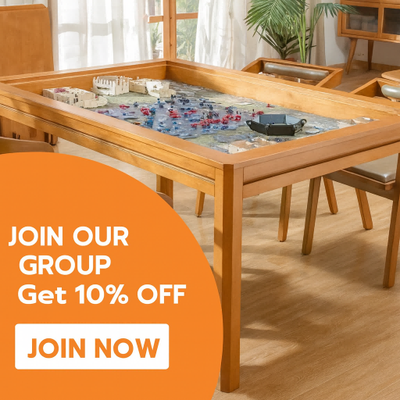
| Recessed play area | You need a very specific saved-game depth. | A normal recessed area and topper cover the use case. |
| Rails and holders | You want permanent built-ins around every edge. | Card, cup, and token needs change by game. |
| Lighting and finish | Wiring or wood tone must match a fixed room plan. | Room lighting and available finishes handle the need. |
| Storage | Custom if built-in room cabinetry is required | Modular if collections and accessories change |
Separate Permanent Features From Flexible Features
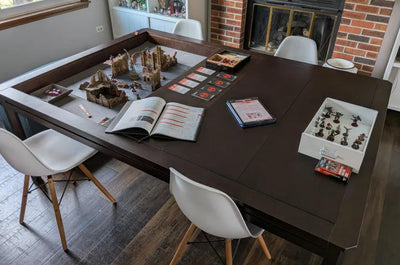
Permanent features should solve problems that appear every session. If your group always plays large maps, oversized boards, or miniature-heavy games, size and edge access should come first. If your table must also serve meals, topper handling and closed-table appearance need early attention.
Gaming tables become easier to compare once you divide each feature into permanent or changeable. Permanent choices shape the table. Changeable choices shape the session.
Use Modular Options Before Paying for Permanent Changes
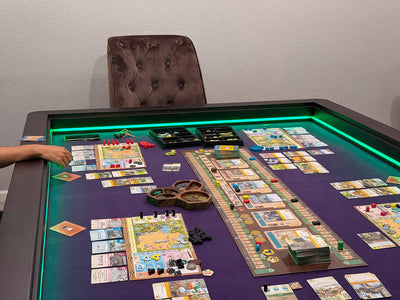
Gaming table accessories are better for needs that change by game type: cup holders for long sessions, card holders for TCG nights, token trays for component-heavy games, and side storage for active play. Paying for permanent built-ins makes less sense if the need appears only sometimes.
The Ironside 2.0 game table suits players who want rails, toppers, and accessory changes to handle different game nights. A group can move from card games to RPG sessions without rebuilding the entire room around one fixed setup.
Choose Wood and Presence With More Care
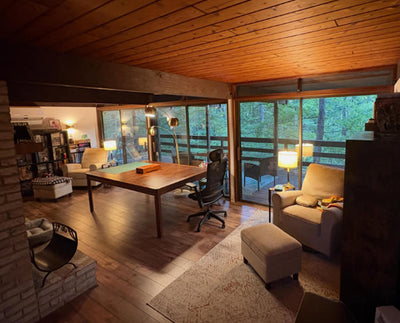
A Kingswood gaming table makes more sense for players who care about furniture presence, wood finish, and a table that looks intentional in a shared room. In that case, the main decision is not how many add-ons exist. The decision is whether the table should feel like permanent home furniture that also handles serious tabletop play.
For players comparing custom woodworking against ready-made options, a finished modular table can answer many of the same needs with less planning risk. The key is to pay for permanent decisions only when they solve a permanent problem.
Turn the Feature List Into a Purchase Decision
Before paying for permanent customization, rank the features in order: table size, recessed play area, topper use, rail needs, lighting, finish, seating, and nearby storage. Mark each one as daily, weekly, or rare.
Daily needs deserve the table budget. Weekly needs may deserve modular add-ons. Rare needs should not drive the whole purchase. That is how a custom table plan becomes a real decision instead of a long wishlist.